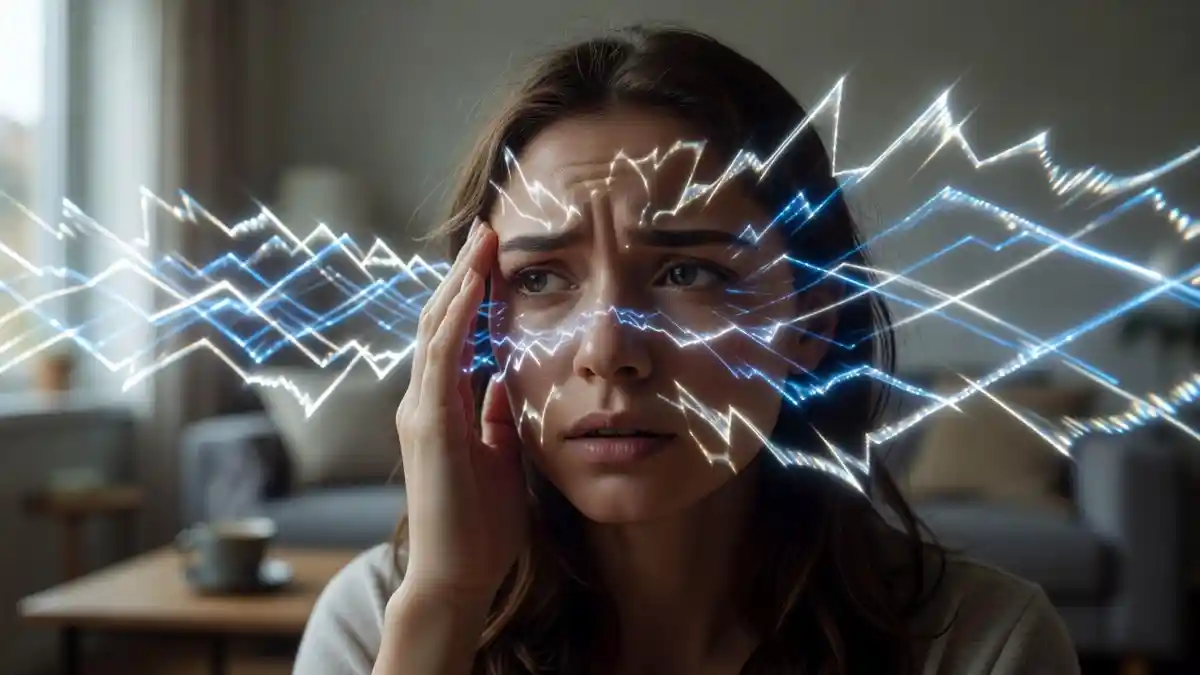
A sudden shimmer across your field of vision, a blind spot that wasn’t there five seconds ago these are symptoms of eye migraines, and they strike without warning.
Our team has been tracking reader inquiries on this topic, and the volume has surged dramatically in the past year.
If you’ve ever experienced a visual disturbance that left you anxious and confused, you’re far from alone.
Why Is My Husband Yelling at Me?
Key Takeaways
- Symptoms of eye migraines typically include visual auras, blind spots, and shimmering lights often without a headache.
- Episodes usually last between 5 and 60 minutes and resolve on their own, but they can trigger significant anxiety and panic.
- While generally harmless, certain warning signs demand immediate medical attention to rule out stroke or retinal damage.
What Exactly Are Eye Migraines?
Eye migraines clinically referred to as ocular migraines or retinal migraines are neurological events that primarily affect vision.
According to the American Migraine Foundation, these episodes involve temporary visual disturbances that can occur with or without the traditional throbbing headache most people associate with migraines.
The term itself can be confusing.
The National Eye Institute distinguishes between retinal migraines, which affect one eye, and migraine auras, which affect both eyes.
Our analysis suggests most people use “eye migraine” as a catch-all for both.
How Do Symptoms of Eye Migraines Actually Feel?
If you’ve been following health trends around neurological conditions, this won’t come as a surprise: the visual symptoms are the hallmark.
Here’s what people typically report:
- Scintillating scotoma — a flickering, zigzag arc of light that expands across your visual field
- Blind spots — small areas of lost vision, sometimes growing larger over minutes
- Shimmering or kaleidoscope patterns — bright, fragmented visual effects
- Tunnel vision — a narrowing of peripheral sight
- Temporary vision loss in one eye (retinal migraine specifically)
How To Reduce Screen Time Tips?
These symptoms of eye migraines can be profoundly unsettling, especially during a first episode.
| Symptom | Duration | Typical Severity |
|---|---|---|
| Zigzag lights / aura | 5–30 minutes | Mild to moderate |
| Blind spots | 10–60 minutes | Moderate |
| Temporary vision loss (one eye) | 5–60 minutes | Severe — seek care |
| Headache following aura | 4–72 hours | Varies |
| Light sensitivity | Hours | Moderate |
Why Do Eye Migraines Trigger Anxiety and Panic?
This is where psychology intersects sharply with physical health.
Industry insiders in behavioral health are noting a strong bidirectional relationship between symptoms of eye migraines and anxiety disorders.
A study published in The Journal of Headache and Pain found that migraine sufferers are two to five times more likely to experience generalized anxiety.
The sudden onset of visual distortion can mimic what many people fear is a stroke, sending the nervous system into overdrive.
We found that readers who experience these episodes often develop anticipatory anxiety a persistent fear of the next attack.
This creates a feedback loop: stress triggers migraines, and migraines trigger stress.
Comparison Is the Thief of Joy Reveals Why
What Steps Should You Take During an Episode?
Recognizing symptoms of eye migraines is the first step toward managing them calmly.
Here is a clear protocol our team recommends based on guidance from the National Health Service (NHS) and the Cleveland Clinic:
Step 1: Stop what you’re doing.
If you’re driving, pull over immediately.
Step 2: Sit or lie down in a dimly lit, quiet room.
Step 3: Close your eyes and apply a cool cloth to your forehead.
Step 4: Note the time track how long the visual disturbance lasts.
Step 5: Avoid screens until the symptoms fully resolve.
Step 6: Log the episode in a migraine diary, recording potential triggers like caffeine, sleep deprivation, or stress.
Step 7: If vision loss occurs in only one eye or symptoms last beyond 60 minutes, contact emergency services or your ophthalmologist immediately.
When Should You Worry?
Most symptoms of eye migraines are benign and self-limiting.
However, the American Academy of Ophthalmology stresses that sudden monocular vision loss affecting just one eye requires urgent evaluation to rule out retinal artery occlusion or transient ischemic attack (TIA).
Our team cannot overstate this: do not self-diagnose.
A proper examination, including a dilated eye exam, is essential after a first episode.
Adult Children Of Emotionally Immature Parents
The Bottom Line
Understanding the symptoms of eye migraines empowers you to respond with clarity instead of panic.
These episodes sit at the intersection of neurology, ophthalmology, and psychology and dismissing them serves no one.
More Info to Visit Ombrophobes