Every year, thousands of people panic after noticing an alarming change in their phlegm color. If you’ve recently found yourself coughing up brown mucus, you’re not alone — and the cause may be more straightforward than you fear.
While brown-tinged sputum can feel deeply unsettling, understanding its origins is the first step toward reclaiming your peace of mind.
Key Takeaways:
- Coughing up brown mucus is commonly linked to environmental irritants, old blood, smoking, or infections — not always a medical emergency.
- Anxiety and health phobias can amplify the distress surrounding this symptom, sometimes more than the symptom itself.
- Knowing when to see a doctor versus when to monitor at home can prevent both unnecessary panic and dangerous delays.
What Urine Leukocytes -Poct Reveal About Your Health
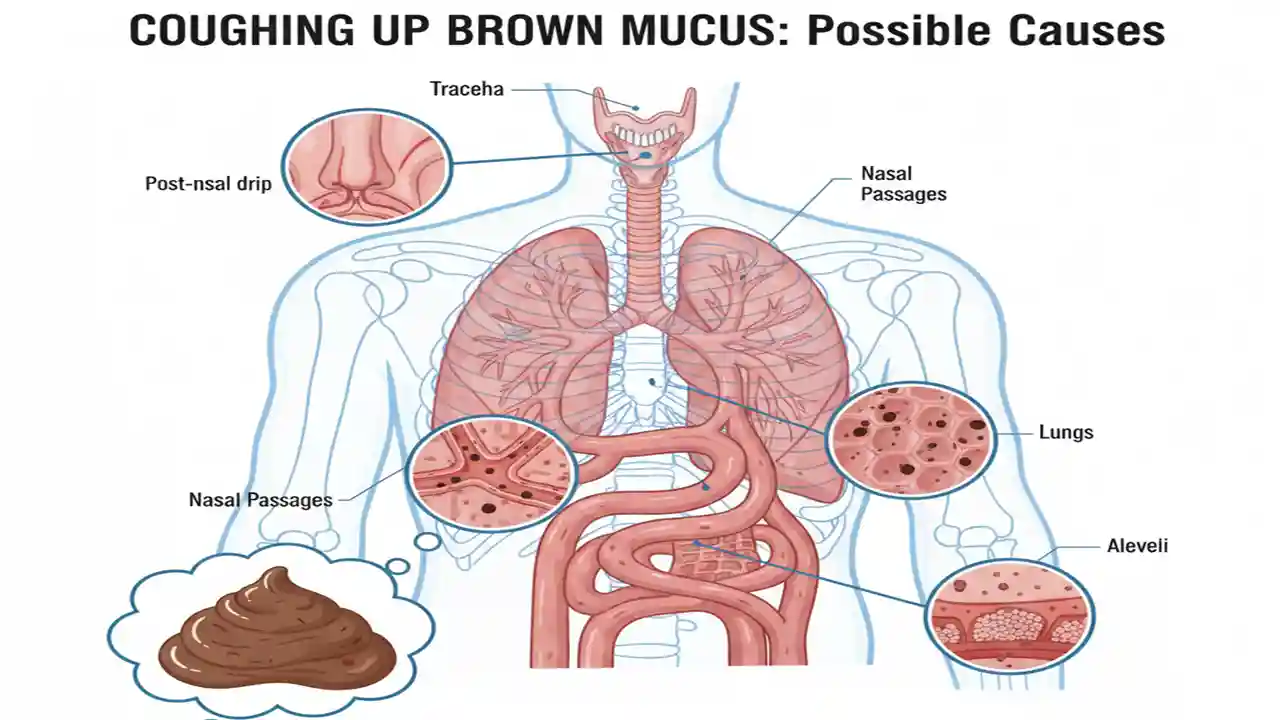
Why Is Your Mucus Brown?
Mucus acts as your body’s built-in filtration system.
It traps dust, bacteria, and pollutants before they reach your lungs.
When that mucus turns brown, it typically signals one of several causes some benign, others requiring attention.
According to the Cleveland Clinic, mucus color changes often reflect what your body is clearing out rather than an active crisis.
Here’s a breakdown of the most common reasons:
| Cause | Severity | Action Needed |
|---|---|---|
| Smoking or tobacco use | Moderate | Cessation program recommended |
| Inhaled dust or pollution | Low | Monitor; improve air quality |
| Old blood from minor irritation | Low to Moderate | Track frequency; see doctor if persistent |
| Bacterial infection (bronchitis) | Moderate | Medical evaluation advised |
| Fungal lung infection | High | Immediate medical attention |
| Chronic lung disease (COPD) | High | Ongoing specialist care required |
Our analysis suggests that the majority of cases fall into the low-to-moderate category, especially among non-smokers in urban environments with high air pollution.
Spotting During Ovulation What It Means
What Does Coughing Up Brown Mucus Mean for Your Mental Health?
Here’s the part most health articles overlook entirely.
For individuals living with health anxiety sometimes called hypochondria or illness anxiety disorder — coughing up brown mucus can trigger a psychological spiral that is, frankly, as debilitating as any physical illness.
The National Institute of Mental Health reports that anxiety disorders affect over 40 million adults in the United States annually.
A significant subset of those individuals experience somatic symptom fixation, where a single physical change becomes the focus of catastrophic thinking.
If you’ve been following psychology trends, this won’t come as a surprise: the body-mind feedback loop is powerful.
Noticing brown mucus leads to Googling, which leads to worst-case diagnoses, which leads to hyperventilation, which leads to more coughing — and potentially more discolored mucus.
We’ve seen this pattern repeatedly in reader correspondence.
Hyperextended Knee What to Do Right Away
How Can You Respond Calmly and Effectively?
Rather than spiraling, follow these evidence-based steps:
Step 1: Document the symptom.
Note the color, consistency, frequency, and any accompanying symptoms like fever, chest pain, or shortness of breath.
Step 2: Evaluate your environment.
Have you been exposed to smoke, construction dust, wildfire haze, or heavy pollution in the past 48 hours? The Environmental Protection Agency links indoor and outdoor air quality directly to respiratory mucus changes.
Step 3: Hydrate aggressively.
Drinking water and inhaling steam can thin mucus and help your body expel irritants faster, according to guidance from the Mayo Clinic.
Step 4: Stop smoking (if applicable).
The American Lung Association confirms that coughing up brown mucus is one of the most reported symptoms among active and recently-quit smokers as tar clears from the airways.
Step 5: Set a 72-hour watch window.
If the brown mucus persists beyond three days, worsens, or is accompanied by blood, fever above 101°F, or difficulty breathing, contact your healthcare provider immediately.
Step 6: Address the anxiety component.
If the symptom is causing disproportionate distress, the Anxiety and Depression Association of America recommends cognitive behavioral therapy (CBT) as a first-line intervention for health-related phobias.
Pain in Lower Right Back Somatic Anxiety Explained
When Should You Actually Worry?
Not every instance of coughing up brown mucus demands a trip to the emergency room.
But certain red flags should never be ignored:
- Brown mucus lasting longer than one week
- Mucus mixed with bright red blood
- Unexplained weight loss alongside the symptom
- Chronic cough with night sweats
- History of lung disease or immunosuppression
The World Health Organization emphasizes that persistent respiratory symptoms in at-risk populations warrant prompt diagnostic imaging and pulmonary function testing.
The Bottom Line
Coughing up brown mucus is your body communicating — not necessarily screaming.
Our team observed that informed, measured responses consistently lead to better outcomes than panic-driven ER visits or, conversely, dangerous avoidance rooted in fear.
More Info to Visit Ombrophobes