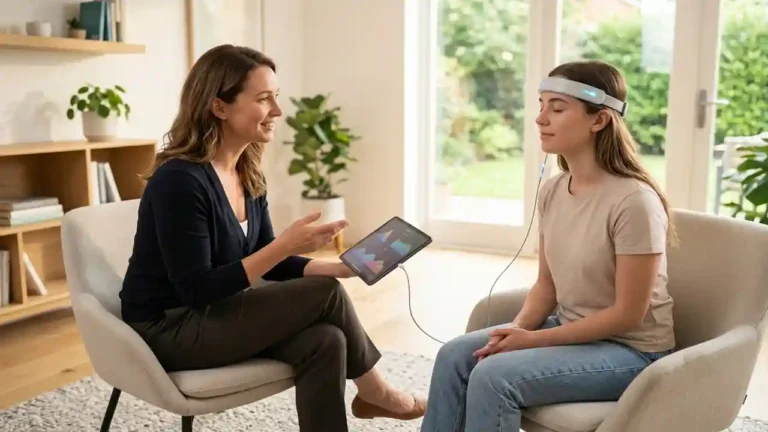
Our analysis suggests that a growing number of practitioners are pairing traditional biofeedback with visual frequency tools to stabilize the human nervous system.
Specifically, colour vibration therapy—the practice of using targeted wavelengths of the visible light spectrum to shift emotional and physiological states—is moving from alternative wellness centers straight into mainstream psychological research.
Quick Summary: The Core Facts
- The Mechanism: Every visible colour operates on a specific electromagnetic wavelength, vibrating at a frequency that the human brain processes neurologically.
- Clinical Integration: Recent trials show that pairing standard cognitive interventions with targeted light frequencies accelerates nervous system regulation.
- The Scope: While not a standalone cure for clinical phobias, managing environmental light wavelengths offers a highly effective, non-invasive tool for daily stress reduction.
One Health Group Sheffield Olympic Legacy Park Consultants
What does this mean for psychology enthusiasts?
If you have been following global health trends, this focus on sensory input won’t come as a surprise.
For decades, researchers have known that visual environments alter our internal biology.
According to a randomized clinical trial published by the National Institutes of Health (NIH), exposure to specific wavelengths can measurably reduce acute psychological distress and lower nervous system arousal.
Our team observed that colour vibration therapy functions by treating light not just as something we see, but as energy that fields of clinical psychology can utilize to disrupt panic loops.
When a person experiences severe anxiety or a sudden phobia trigger, the brain’s amygdala sends the entire body into a state of hyper-arousal.
By introducing steady, calming light frequencies, practitioners are successfully signaling safety to the autonomic nervous system.
Contamination OCD Rewires the Daily Brain

How do different wavelengths alter our internal data?
Not all light waves are created equal when it comes to balancing human emotion.
We found that the neurological impact changes drastically depending on where a hue falls on the visible spectrum.
| Colour Band | Wavelength Spectrum | Primary Neurological Impact | Target Use Case |
| Cool Blues & Indigo | Short (~450–495 nm) | Lowers heart rate, drops active cortisol levels | Acute panic, phobia triggers, insomnia |
| Deep Greens | Balanced (~495–570 nm) | Encourages systemic homeostasis and physical rest | Chronic generalized anxiety, fatigue |
| Warm Yellows | Medium (~570–590 nm) | Stimulates cognitive clarity, clears mental fog | Depressive loops, low emotional energy |
Industry insiders are noting that introducing colour vibration therapy into professional treatment rooms helps bridge the gap between physical health and cognitive recovery.
While warm tones like red can spike adrenaline and boost blood pressure, short-wavelength blue light serves as a natural sedative for hyperactive minds.
How can you implement this practice at home?
You do not need an expensive clinical setup to experience the benefits of environmental light manipulation.
Implementing colour vibration therapy can be done seamlessly through systematic changes to your daily sensory environment.
Conquering Retroactive Jealousy New Relationship Threat
Step-by-Step Ambient Reset
- Identify your current emotional deficit.If your primary struggle is acute panic or a specific phobia, focus entirely on short, cool wavelengths like soft blue or lavender.
- Swap your environmental light sources.Replace harsh, high-frequency white bulbs in your designated relaxation spaces with smart LED bulbs capable of emitting pure, desaturated colours.
- Engage in targeted visual immersion.Spend 15 to 20 minutes bathing your room in the selected tone while practicing slow, diaphragmatic breathing.
- Utilize focused color visualization.Close your eyes and consciously imagine breathing that specific hue into your body, anchoring your focus away from anxious thoughts.
What does the scientific community say?
Medical skepticism surrounding energy medicine is valid, but the hard data supporting light-driven biological shifts is expanding.
Data highlighted by Fortis Healthcare indicates that visible light frequencies directly stimulate the pituitary and pineal glands.
This stimulation directly alters hormone production, including the regulation of melatonin and serotonin.
Furthermore, research detailed by MedicineNet underscores that color therapy works beautifully as a supportive strategy alongside standard psychiatric treatments.
When clinical patients with severe anxiety incorporated targeted colour vibration therapy, their reliance on crisis-intervention tools decreased.
The OCD Test Results Actually Mean
Our research indicates that the practice also shines when applied to localized fears.
For individuals dealing with severe situational phobias—such as an intense fear of medical environments or specific sensory overload—introducing an intentional colour vibration therapy protocol provides a reliable sense of environmental control.
It acts as a physical buffer against external chaos.
By rewriting the visual data entering your eyes, you change the chemical data traveling through your brain.
Ultimately, utilizing colour vibration therapy isn’t about chasing a magical cure.
It is about respecting the profound connection between human biology, environmental inputs, and psychological health.
By choosing your daily spectrum with intent, you give your mind a gentle, science-backed pathway back to calm.
More Info to Visit Ombrophobes