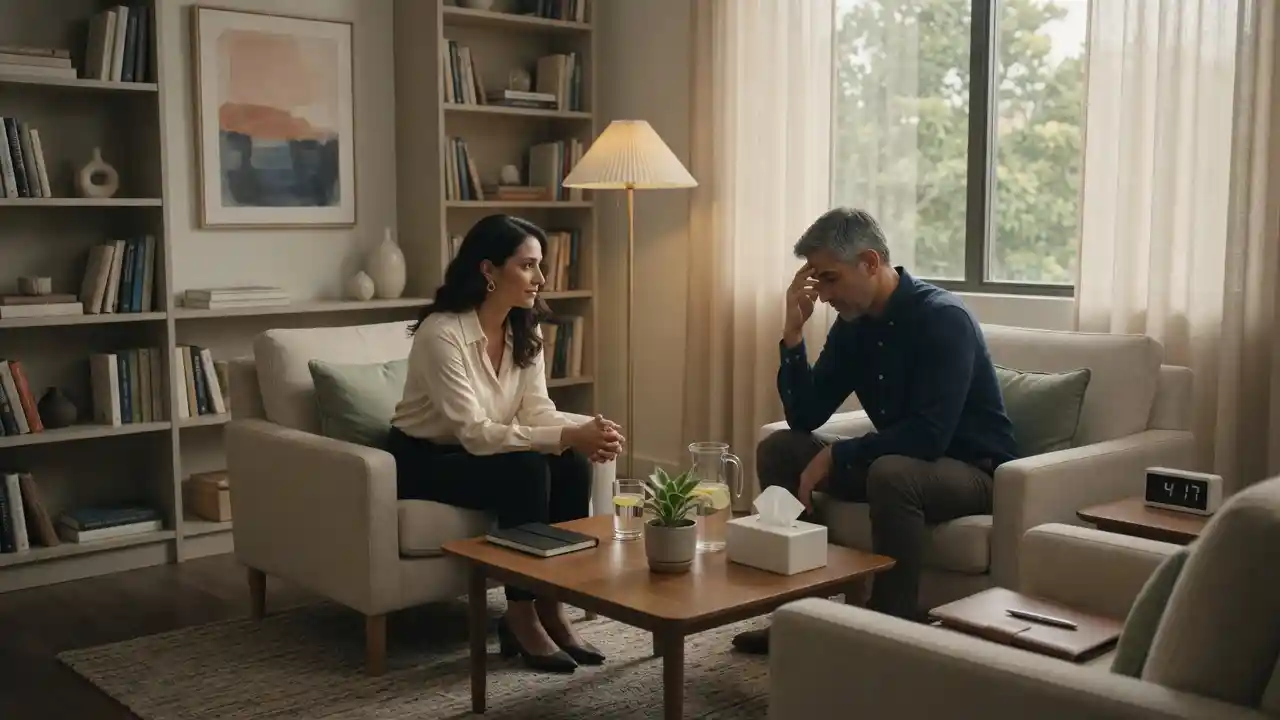
Every relationship hits rough terrain but before you assume professional help is out of reach, it’s worth pausing to ask: how much is couples therapy in 2026, really?
The answer may surprise you.
Cost is the single biggest barrier keeping partners out of the therapist’s office, but the actual price tag is more flexible than most people think.
Key Takeaways:
- The national average for couples therapy ranges from $100 to $250 per session as of 2026.
- Most insurance plans do not cover couples or marriage counseling, as health insurance typically only covers services deemed “medically necessary” to treat a diagnosed mental health condition.
- Studies on Emotionally Focused Therapy (EFT) show that 70 to 75 percent of couples move from distress to recovery, and about 90 percent show significant improvement.
Federal Reserve HPOP Millennial Wealth
What Does the Price Actually Look Like?
Our analysis suggests that how much is couples therapy depends heavily on three variables: format, geography, and therapist credentials.
Here’s the breakdown we assembled from current data:
| Therapy Format | Cost Per Session | Notes |
|---|---|---|
| In-Person (Private Practice) | $150–$300 | In major cities like San Francisco, New York, or Los Angeles, experienced therapists often charge $250 to $600 per session. |
| Online Platforms | $65–$120/week | Online couples therapy can be more affordable, with sessions ranging from $100 to $250 per session through private practices, or $65 to $120 per week through subscription platforms. |
| With Insurance (Copay) | $20–$80 | With coverage, copays are often $20–$80, depending on diagnosis, provider network status, and plan details. |
| Sliding Scale / Community | $10–$70 | Available at training clinics and community mental health centers |
| Weekend Intensives | $3,500–$11,500 | Most couples pay between $150–$300 per 50-minute session, or $3,500–$11,500 for weekend intensives. |
If you’ve been following psychology and health trends, this won’t come as a surprise: the range is wide.
The question of how much is couples therapy really becomes a question of what kind of support fits your life.
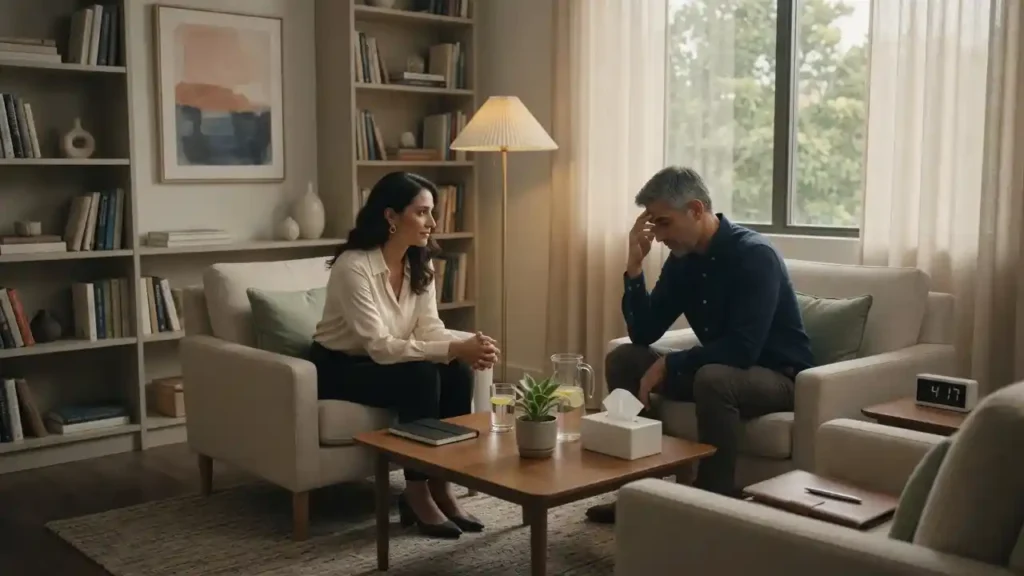
How Many Sessions Should You Budget For?
This is where financial planning becomes critical.
According to the American Association of Marriage and Family Therapy, marital/couples therapy takes approximately 11.5 sessions on average a useful reference point for expenditure budgeting.
For a 12-session treatment plan, total costs range from $1,200 to $3,000 without insurance.
That’s a significant investment, but consider the alternative.
The national average cost of divorce sits around $15,000, and what you actually pay depends on how much you and your spouse agree on, what state you live in, and whether you hire a lawyer.
Our team observed that when couples compare how much is couples therapy against the financial fallout of separation, therapy almost always represents a fraction of the cost.
How a Therapist for Avoidant Attachment Heals You
Will Insurance Cover Any of It?
This is where it gets tricky and where a lot of couples feel stuck.
Insurance typically covers couples therapy only when one partner has a diagnosed mental health condition and treatment is medically necessary; relationship issues alone are rarely eligible for coverage.
Insurance typically won’t cover couples therapy when the focus is purely on relationship dynamics. But coverage can open up when one partner has a diagnosable mental health condition. In practice, the sessions are billed under one partner’s individual diagnosis — not as couples therapy.
Industry insiders are noting a positive shift, however.
More employers now include Employee Assistance Programs (EAP) that cover 3–8 free couples sessions check with your HR department.
Thick Toenails Nails Are Telling You
How Can You Make It More Affordable?
Here are step-by-step instructions we recommend for reducing what you pay:
- Check your EAP benefits. Contact HR and ask specifically about couples counseling sessions — many programs cover them at no cost.
- Ask about sliding scale fees. Many therapists offer sliding scale fees based on income.
- Consider online platforms. Online therapy reduces costs by approximately 30–50% compared to in-person treatment and provides greater privacy.
- Request package pricing. Ask about package discounts (e.g., 10 sessions for 10% off).
- Explore training clinics. University-affiliated programs often provide supervised couples therapy at significantly reduced rates.
- Verify in-network providers. In-network providers have agreements with insurance companies, usually meaning lower costs for you.
- Look into Medicare Part B. Medicare Part B covers 80 percent of the cost of couples therapy when requirements are met.
What Does This Mean for Your Health and Well-Being?
The psychological cost of not seeking help often dwarfs the dollar figure.
Relationship problems can lead to anxiety, depression, and physical health issues like increased blood pressure, and therapy helps mitigate these effects and improve overall well-being.
The top barriers to couples therapy are cost (55%), partner resistance (38%), scheduling/logistics (36%), stigma (32%), and lack of insurance coverage (30%).
We found that knowing how much is couples therapy often removes the fear of the unknown — one of the biggest psychological barriers keeping couples from booking that first appointment.
One of the most widely cited statistics in couples therapy is that couples wait too long before seeking professional help, with benefits persisting for at least 5 years after treatment for the average couple.
Post-Hospital Care Means for Your Recovery
How Much Is Couples Therapy Worth to You?
The bottom line: how much is couples therapy is the wrong question in isolation.
The right question is what it costs you to stay stuck.
Sometimes separation is the healthiest path forward, but therapy gives you the chance to make that decision from a place of clarity rather than reactivity.
A 12-session course of therapy might run you $1,200 to $3,000 out of pocket.
A contested divorce can easily exceed $15,000.
And the psychological toll of unresolved conflict? Immeasurable.
More Info to Visit Ombrophobes